
The answer to Chinese tactics of nibbling territory is not defence of every inch -- a military impossibility -- but instead, nibbling at Chinese territory wherever we are in a stronger position, counsels Colonel Anil A Athale (retd).

16 Indian Army divisions face China, 20 face Pakistan and two divisions are reserves. This powerful signal can hardly be missed in China or Pakistan, notes Ajai Shukla.

'Indian diplomacy faltered amidst multiple failures of statecraft.' 'The functionaries responsible must be held to account for their abject failure,' asserts Ambassador M K Bhadrakumar.

Overall, the People's Liberation Army Air Force (PLAAF) has focused on building ground-based air defense networks and network-centric operations rather than trying to match the Indian Air Force (IAF) in terms of straight fighter numbers along the border. All air assets fall under the Western Theater Command of the PLA, the largest geographic region of China's five military theater commands.
'India cannot allow Beijing's policy of stabilising and destabilising the border at will to perpetuate its own ends.' A riveting excerpt from Manish Tiwari's 10 Flashpoints; 20 Years National Security Situations That Impacted India.

If you are serious about countering the Chinese threat, then the best weapon is investing in real freedom, plurality, elections and democracy. Unfortunately, it isn't an approach all Indians currently seem to agree on, asserts Shyam G Menon.
...with extravagant claims in both the eastern and western sectors, observes Ambassador Talmiz Ahmad, as India is fixated on asserting its border claims based on the McMahon Line.

'We can expect heightened belligerence from China.'
In the 15-year dataset, the researchers noted an average of 7.8 incursions per year even though the Indian government's estimates are much higher.
'The real issue between India and China is that the Chinese have transgressed along the Line of Actual Control at multiple points.'

Unhappy over China showing Arunachal Pradesh and Aksai Chin as its territory in maps of the country on their new e-passports, India has retaliated by issuing visas, containing Indian maps including these regions as part of it.

A weaker Russia, a sobered China at a time when Xi Jinping is manoeuvring to protect his third term prospects, a reunited West, a chaotic Pakistan. This is a perfect set of strategic circumstances. It is for India now to consummate this historic opportunity, argues Shekhar Gupta.

India has not yet received any confirmation on Chinese President Xi Jinping's in-person participation at the upcoming G20 summit, people familiar with the matter said on Thursday amid reports that he is likely skip the conclave.
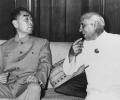
'Unquestionably, the spirit behind the Panchsheel agreement and the 'Hindi Chini bhai bhai' slogan were thrown overboard by the Chinese, and a trust deficit was injected between the two nations.' A revealing excerpt from General J J Singh's The McMahon Line: A Century Of Discord.

'The numbers of troops on both sides are enormous.' 'They are about 50,000-60,000 soldiers facing each other in that sector -- that's about the total number of troops that both sides had in the 1962 War in all sectors.'
There's ample proof of Chinese irredentism. China is preparing for a future large-scale conventional wars (informationised and mechanised included) on 'multiple fronts' against India. Prakash Katoch, veteran Lieutenant General of the Indian Army, explains.
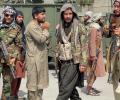
'Imagine China pursuing its aims in Jammu and Kashmir by using Pakistani and now Afghan proxies.'

'These tactics are particularly evident in China's pursuit of its territorial and maritime claims in the South and East China Seas as well as along its border with India and Bhutan'

'It is a pattern of behaviour of the Chinese that whenever a Chinese leader visits India or an Indian leader visits China, some incidents take place.' 'When Modi visits China, we should look out for some similar demonstration by the Chinese.'

Dai Bingguo, who served as the China's boundary negotiator with India from 2003 to 2013, told Chinese media, "If the Indian side takes care of China's concerns in the eastern sector of their border, the Chinese side will respond accordingly and address India's concerns elsewhere."

Justice Subramonium Prasad issued notice to the Centre seeking its stand on the former MP's petition for a direction to the authorities to give an "effective response" to his query.

'India has to prepare for future warfare where kinetic use of force at the border will be limited. War will take place in the realms beyond the border.'
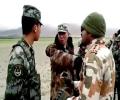
'During disengagement, you don't find violence.' 'And that, too, the killing of a commanding officer.' 'This indicates that this is more serious than previous incidents.'
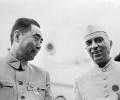
The Indians felt that if they acceded to Chinese claims in Ladakh, Beijing would simply be emboldened to press for further concessions in the future. A revealing excerpt from India And The Cold War.

'Keeping Kashmir out of the informal summit does not mean that they have given up their strategic interest.'

National Security Adviser Shivshankar Menon on Monday downplayed the recent "map row" with China contending that the issue required to be looked at in the perspective of boundary talks, which have made progress.

A controversy was kicked up on Thursday with China's state-owned television CCTV showing India's map without Jammu and Kashmir and Arunachal Pradesh while reporting on Prime Minister Narendra Modi's visit.

'China wants to change the status quo of India's Northern Border and proves that it can do whatever it wants in what it perceives as its own territory,' states Claude Arpi.

'There was a wrong policy of government during the Congress regime. They didn't construct roads up to the border which left a buffer zone of 3-4 km which China occupied. Construction of new villages isn't a new thing, it's all inherited from Congress'

The Bharatiya Janata Party is hopeful that the issue will come handy to its efforts to gain political traction in Dravidian state as it gears up for the Lok Sabha polls.
'The unfortunate truth is that China, having exploited the initiative to seize pieces of India's claimed territory, can now hold on to its new acquisitions forever unless India chooses to eject Chinese troops by force or decides to impose tit-for-tat costs on China by symmetrically occupying other pockets in disputed territory where it possesses a tactical advantage'

Prime Minister Modi made a strategic blunder of Nehruvian proportions -- presuming no war can happen now, and the Chinese won't be a military threat and risk their economic interests, observes Shekhar Gupta.

A deft hand on India-China relations, Bambawale earlier handled the China desk at the MEA.
It is apparent that an easing of tensions at the border and a disengagement of troops is on the cards, observes Ambassador M K Bhadrakumar.

'The border stand-off and the uncertainties that come with it should be a wake-up call on what makes for real rather than illusory power,' observes T N Ninan.

'Unlike the Chinese army that has been largely a peace time force, the Indian Army is a battle hardened force,' explains Colonel Anil A Athale (retd).
The reasons for China's negative response are located in its territorial dispute with India but also to its grand designs of dominating the region from its previous position of being merely a "balancer" between India and Pakistan, points out Srikanth Kondapalli, Professor in Chinese Studies at JNU.
'China is playing the big global game.' 'Their ambitions lie far beyond the Line of Actual Control.'

'India and China have the wise and sage leadership to steer this complex relationship in the coming decades.'
'If Islamic extremists regain power in Afghanistan, Pakistan will lead them to Kashmir as a fighting arena again. India needs to fortify Kashmir and prepare against these Islamic extremists before they come again.'
 © 2026 Rediff.com - Advertise with us - Disclaimer - Privacy Policy - Sitemap - Feedback - About us - Terms of use - Grievances